


“We learn as women, through Yaga, not to ask for permission.”
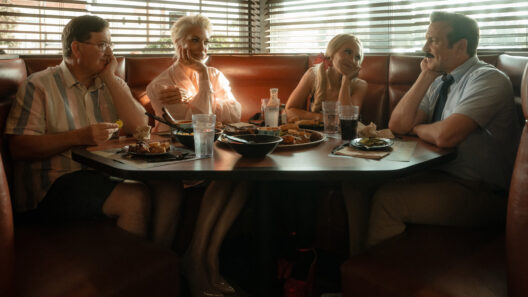
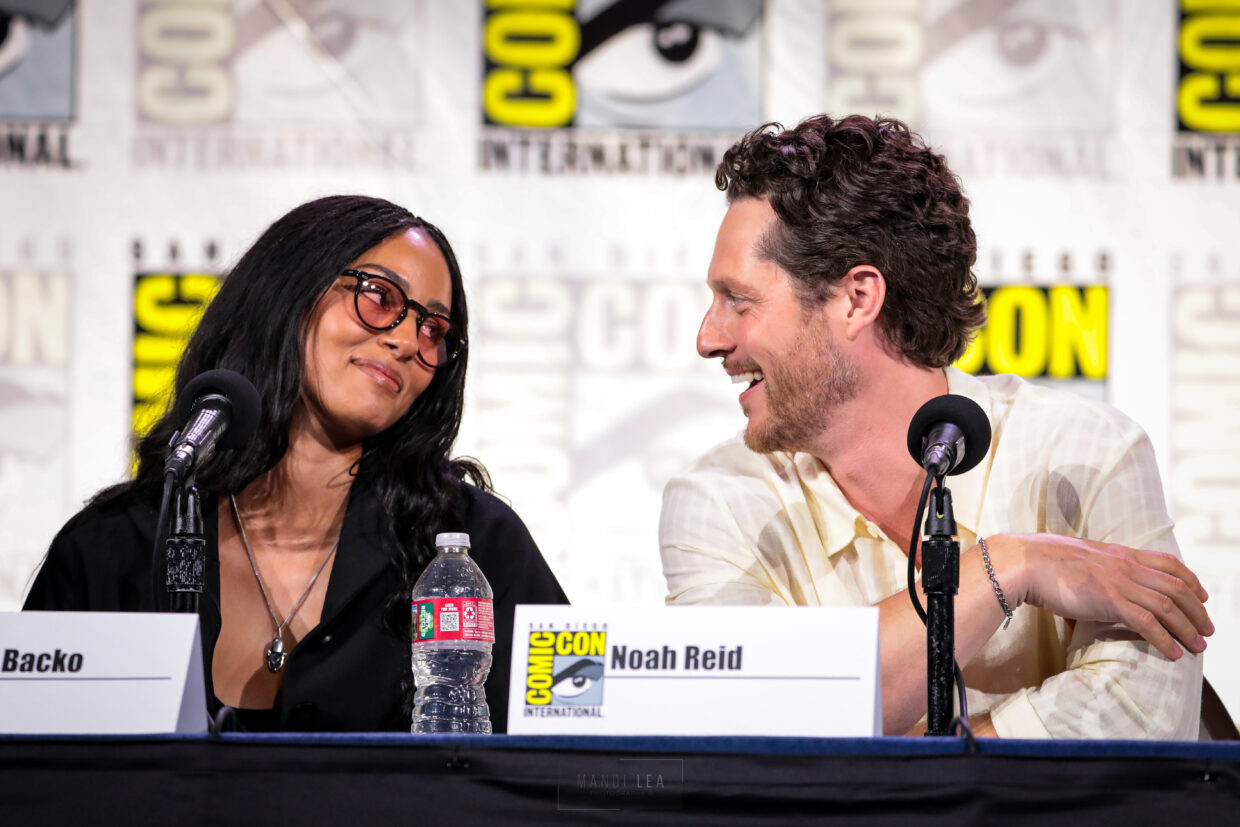
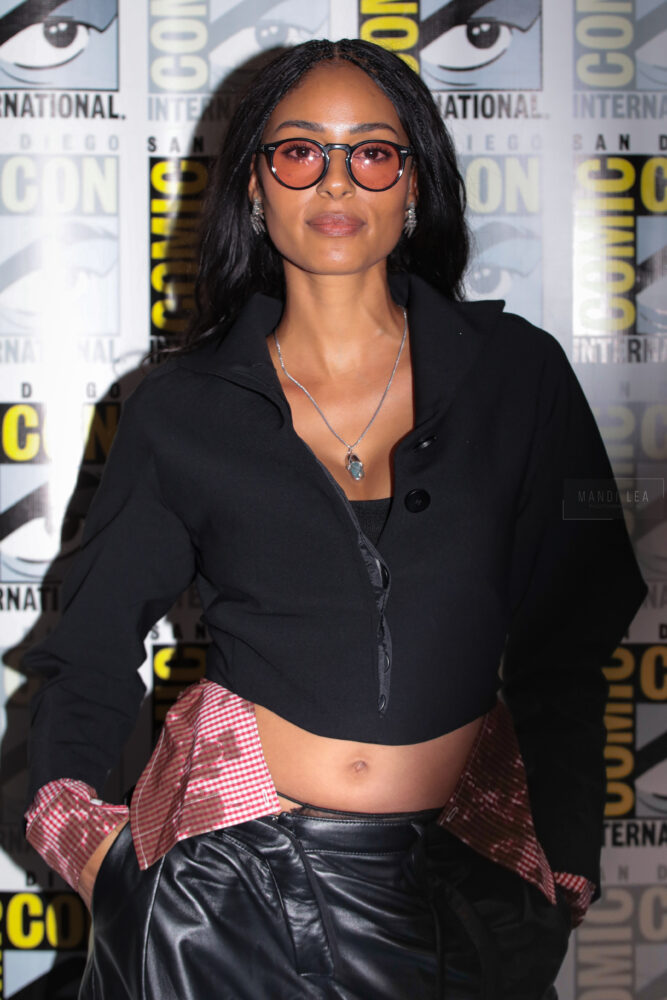
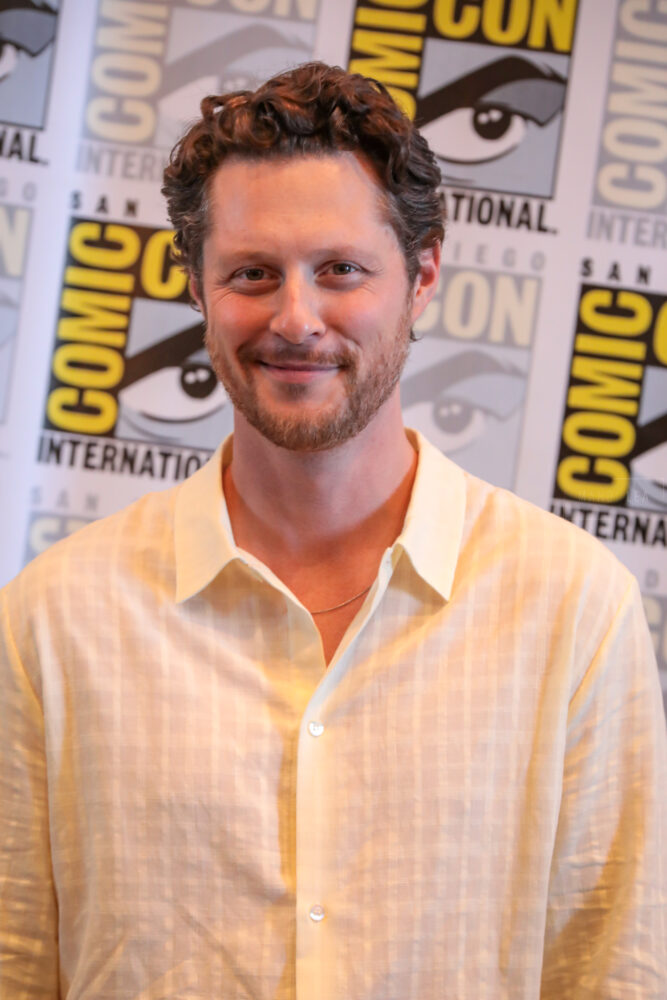
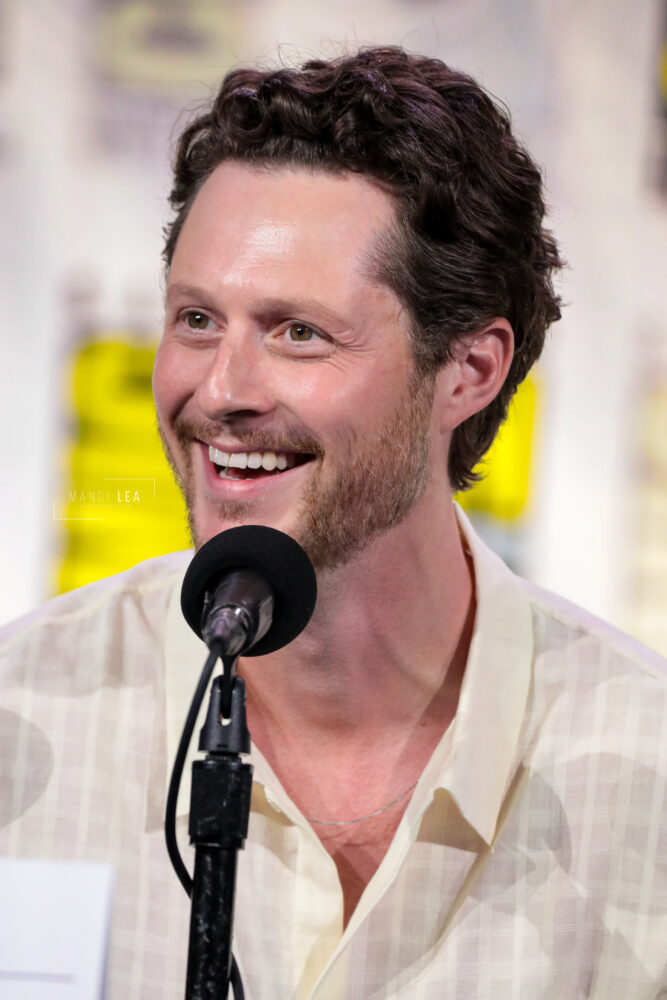
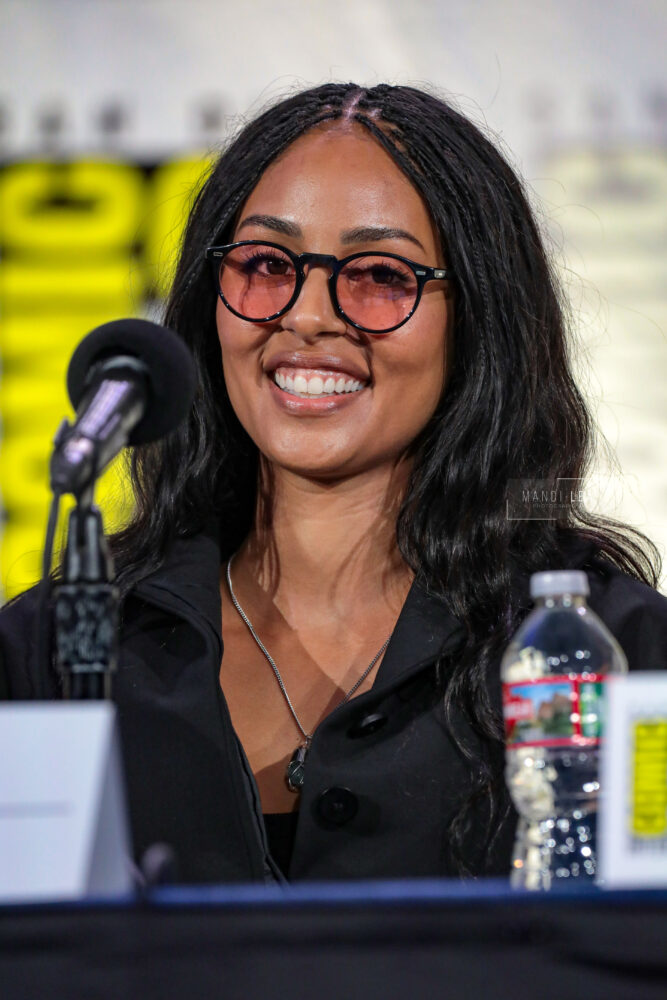
Saturday after the Yaga panel at San Diego Comic Con, press got a chance to sit with stars Noah Reid, Clark Backo and writer and creator Kat Sandler to ask about the highly anticipated series. What followed was an enlightening discussion about female empowerment, what the cast and crew hope audiences take away from the show, and how sex is part of the language of the Baba Yaga.
This interview has been edited for clarity and length.
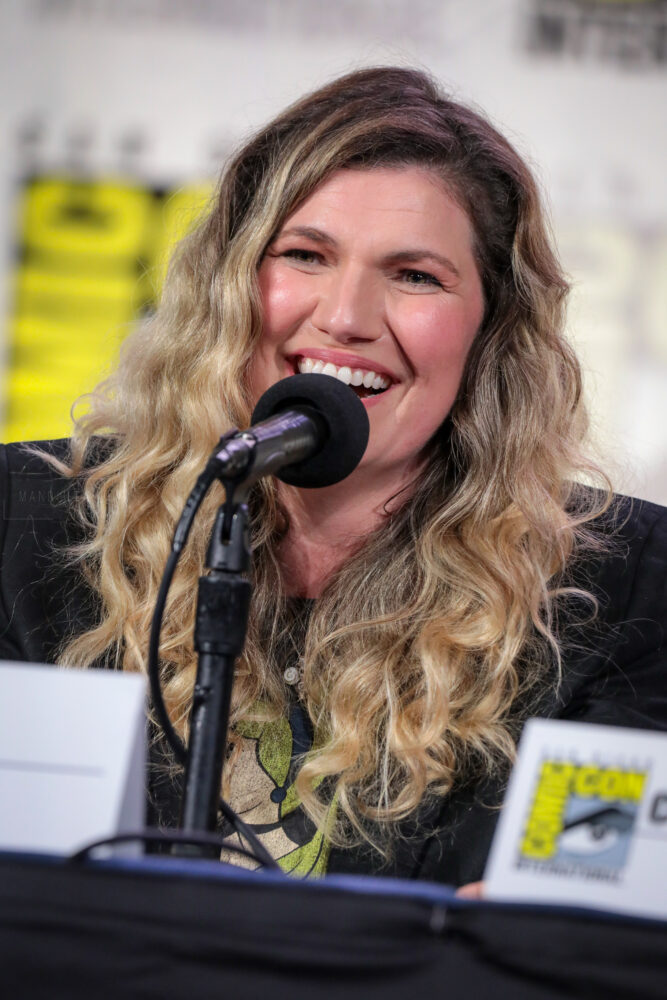
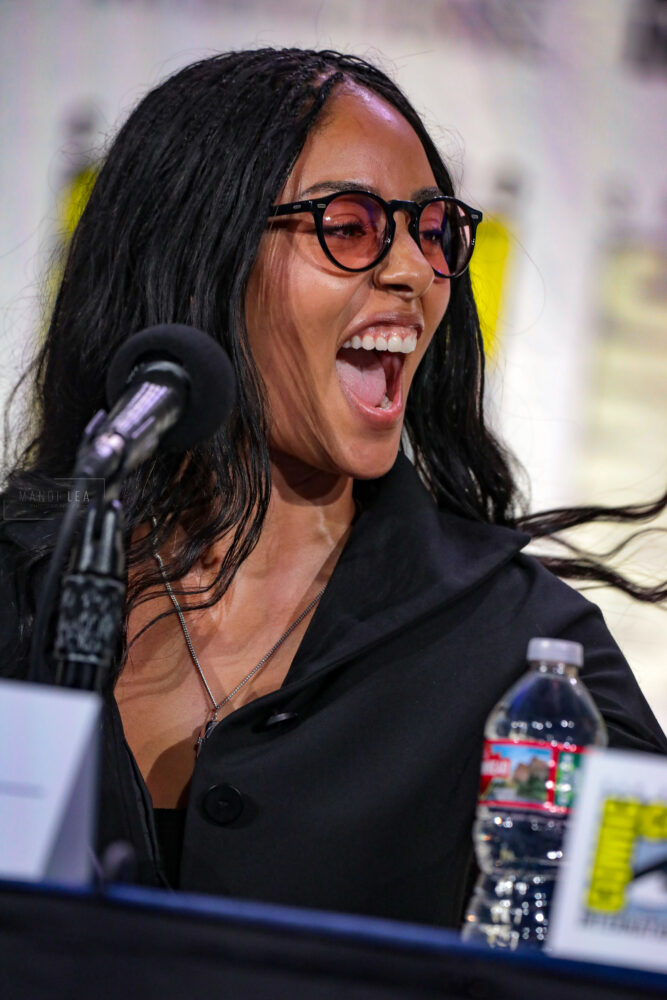
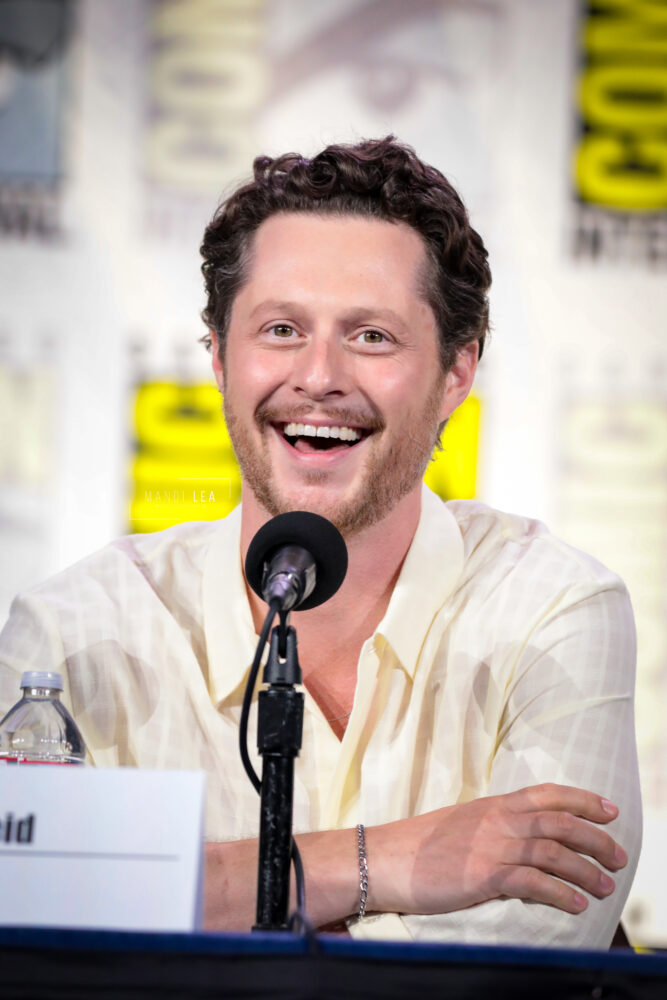
Mandi Heesh, Nerds and Beyond: Yaga is such a morally grey story. Did playing your characters make you sympathize with decisions that you thought you’d never understand?
Noah Reid: I thought a lot about the bad decisions in this show from the perspective of, like, a parent. If you’re the parent of a young person and your job is to kind of teach them a foundation of the parameters of right and wrong, and picking yourself up when you fall down, and trying again, trying better, failing better. That part of the bad decisions in this show is part of what makes it really fascinating, and it churns you a little bit as an audience member, certainly as an actor. It’s a good writer who puts you in that kind of situation where you’re not sure day to day what side of the line you’re on. We would talk about this a lot. Carrie-Anne and I would talk about it a lot. Clark and I would talk about it a lot. Just kind of trying to locate yourself within a character. It’s the old thing: bad news for the character, good news for the actor. And we’ve got a lot of good news in this show for actors.
Clark Backo: I really haven’t been on a set where there is so much discussion that comes out from the source material that you’ve given us. I think everyone, whether it was their character doing it or not, really like having to look inside and question what is right and wrong, who is a monster and who is not, what does justice actually look like served. It’s very complicated, and it’s just a feat that Kat was able to somehow fit some of the biggest questions I’ve ever faced into 30-minute episodes, and only eight of them. It’s incredible. I just hope that the discussions we had on set are mirrored by the audience at home who’s watching.
Kat Sandler: It’s also a lot about legacy. Do we inherit bad behavior? In the (Salem) witch trials, people would have their children accusing them of being a witch and then they would be killed on the testimony of a 4-year-old. Like, “Is your mom a witch?” “Yeah, maybe!” So I think that family and legacy and how things get passed down are also such a big, big part of the fabric of this.
Backo: I’m glad you brought that up because I also think another thing that we’re used to seeing that is male-dominated is male lineage and legacy, and it isn’t often that we get to see female legacy and female lineage, and this takes that and just cranks it up.
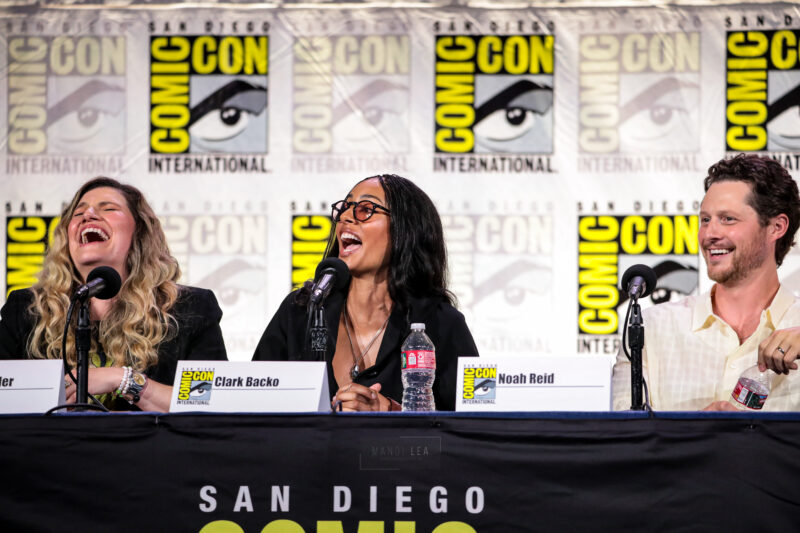
The remainder of the interview is comprised of questions from other news outlets present during the press conference, credited when available and edited for clarity and length.
Question (GeekScape News): In the play, there are only a few actors playing the key roles. Because you got to open this cast up, did you think about ways that you wanted these characters dualities to still be represented in the show, and how did you try to bring that to screen?
Sandler: Yeah, I think the thing with every single character in Yaga is that they are incredibly complex. There is not just one side to them. Every single person has heroic qualities and villainous qualities, so there’s always that duality of like dark and light and good and bad playing. It’s not fun to just be this one two-dimensional thing. So I think there’s absolutely pieces of that in every single character in the show, all thirty that show up.
Question (RedeTV Brasil): Noah, you’re dealing with all these powerful women, both on screen and off screen. How does it feel to be opressed for a change?
Reid: It’s a beautiful position to be in. I think there’s a lot of chickens in this story, and the position of the rooster is a difficult one. The rooster is to protect the flock, but when the chickens don’t need the protection, then the rooster is like kind of a bit useless. And I think that there’s a lot of rooster in Charlie Rapp, and there’s a projection too of masculinity, which I think is easy to see through for a modern audience. The female leadership of this project is something that really drew me to it, and I think it’s an incredibly important and very fun story story that is not told from a male perspective, which I think is beneficial.
Question (Fansided Entertainment): Can you speak to the momentum behind Yaga right now, and what that feels like for you?
Backo: I mean, as a small Canadian production, it’s really incredible, very special, and very rare. I’m just really excited that it seems the whole world is invested in what Kat Sandler is bringing to all of us, and I’m just very lucky to be a part of it, really.
Sandler: I think there’s something that is ethically Canadian about the show, and we are standing on the shoulders of Heated Rivalry. Ethically Canadian, but because of the risk that that show took and Crave and the way the world embraced that show being different and special in its own way, we get to now do something very, very different, but equally bold, and it just feels really nice to get to have made it. Everyone in the cast is Canadian. We shot it entirely in Canada. It’s so, so special to take up space as Canadians and really get to say this is what we are capable of doing. It’s unreal. This is my first TV show. That’s crazy to have this happen, to have these people involved, to have Hudson (Williams) and Carrie-Anne (Moss) and the whole cast. I think this is a cast of my Canadian heroes.
Question: Stories and legends of witches has been part of America’s history from the very beginning. Can you touch on some of those stories from the past and how they’ve influenced your storytelling now?
Sandler: I was saying in the panel I did a bunch of research, and it’s fascinating to see the kind of women that were persecuted as witches, because it’s often healers, midwives, intellectually curious women, just women who were doing whatever the fuck they want. Like, a woman doing whatever the fuck she wants, doing what she wanted to alone in the woods, living by her own rules, is like the scariest thing that like men could possibly imagine. But the thing that’s amazing about witches is every culture, every country has their own brand of witches. Baba Yaga is across all of Eastern Europe, but there’s like the sea hag, which like they use in Widow’s Bay. There’s this beautiful lore of witches, and they’re so different, but they’re kind of the same. It’s just female power, and age and wisdom all molded into this thing that society is like, “No thank you,” and we’re like, “Actually, yes. Now very much.”
Question (The Beat): Clark, you mentioned during the panel that you read these scripts from the play first. As an actor, how has that infused into your work, and how do you approach your character knowing there’s a theatrical history behind it?
Reid: I think that the thing that you can take from that it is kind of atmosphere and a tone and a feeling. You have to play with is what’s directly in front of you. And that is in a big way the difference between theater, which is conjuring imagination and doing something repeatable over the course of the run, and film, which is a lot less is left to the imagination. You’re in these specific locations, you are with specific people, the camera is the audience’s invitation to come into the world, and the brain sets the parameters, and it happens right in that moment, and it lives forever. So I think that really what we had to work with was Kat’s reimagining of her own work, and that comes together in film and television in this beautiful alchemy way.
Backo: Just to add to that, yes, I did read, of course, all of the episodic scripts, and I read the play. Kat and I talked a lot about whether I would watch archival footage of the play, and she decided, kind of on behalf of us, and I’m really glad that you did, that I wouldn’t watch it. And I think that was an incredible and very trusting decision because she wanted to give me space to bring, like he said, myself to Carson. And we didn’t want anything to impede my decisions, my instincts. And again, this show is a lot about female intuition and trusting the little voice inside; whether you call that magic or just intuition is up to you. I think a lot of it is just the balance and mixture of Rapp and I and every other cast member having this space to go out and do our own research, ponder the themes and the genres and everything, the extensive source material that you gave us in these scripts, and then come together and discuss together and then start to play together when they say action.
Sandler: When I cast a play, the person who is playing that part that’s what the character is. This is a completely different version of Yaga. So now Noah is Rapp in television, and Clark is Carson in television. These are the only people that could have done it.
Question (My Nights Are Booked): The series blends crime, folklore, noir, and fantasy in these half-hour episodes. So which genre gets to define the rules when the modes kind of disagree?
Sandler: The rules are, there’s no rules.
Question: AMC has a stable of witch and supernatural shows, but in them witchcraft and magic is real. I’m wondering when you are acting and writing a show, how do you approach it knowing there is no magic?
Backo: It’s hard because to me life is magic. The fact that we’re all in this room is magic. That panel was magic. It’s like, honey, sometimes I say really dumb stuff that feels extremely profound. Like, I was – I can’t even remember who – I think I was talking to my makeup artist about it this morning, but just the fact that we exist on this Earth. Whether you believe in magic or not is kind of irrelevant. So I don’t think there’s too much – at least I’ll speak for myself – there wasn’t too much work involved in that respect because I don’t know. Yeah, reality is magic and magic is reality to me.
Reid: I think it’s also interesting if you’re in the perspective of trying to solve a crime, which is very real-world high stakes. There’s a missing person. We all know the statistics on missing people. We’ve got a short window to recover somebody, and you’re not really probably thinking about – I don’t think that I ever really thought as Charlie Rapp, what if he like magically disappeared. But when you talk to people about their supernatural experiences or moments they’ve had that felt just even a feeling or memories of something to do with, like the time of somebody’s death, or the time of somebody’s birth, all of these interconnected moments, they’re a part of this kind of supernatural fabric that runs through everybody’s life. I think what’s cool about being here at Comic-Con is that this is a world where people really engage with it and really lean into it and are really excited by it. That’s a really amazing element of this show to get to lean into for us.
Sandler: In development, we kind of talked about this as three acts. The first act is very grounded. It’s very cops, detectives, a little bit marauding East town. The second act is a little bit more akin to the supernatural, a true detective. And then the third act, you’re into the fucking witch. But the other thing is we use these dreams in the show, and I like, you can’t tell me that dreams aren’t magical. The shit that I’ve seen in my head while sleep, like, it’s wild. So I think the feeling of magic permeates the whole show, even its parts of it feel much more grounded and real. But people are magic. Women are magic.
Question: Every culture has stories that warn us about something. What do you think Yaga is really warning us about?
Backo: I see it less as a warning, although I’m sure – there’s a warning to men, but like I said in the panel, I don’t think this show’s priority is to be in conversation with men. I really feel that it is a song, a call to action, as you mentioned before as well, for women to just believe that intuition and instinct inside, that is their safety, that is their power. I know it’s kind of a dark show, but I really think it’s really inspiring and actually provides a lot of hope. So I see it more as an invitation and a call to action for women to just take up the space.
Reid: I kind of hope that people watch it, whatever their family or couples at home, I hope that people watch it together because I think there will be really interesting conversation points, especially as the series unfolds to its kind of final act three, as Kat would put it. I think there will be differing opinions on a lot of things in this show, and it’s always been my favorite thing as a kid going to the theater theater and like walking out talking about what you think that meant, what you think that meant, what you think should have happened, even things about the production design. That conversation is maybe not the warning, but the invitation for the audience to become involved with this material.
Question (Wormhole Riders News Agency): What is it about that particular area of Eastern Europe that is so fascinating and brings the Yaga more to life?
Sandler: I think it’s it’s less about Eastern Europe, it’s more that that’s her home, and she’s such a shared entity across all those countries. Like you all heard Boots Are Made for Walking (in the panel), which is in Polish. We use a few other covers in other Eastern European languages throughout the show, so we really are trying to pay homage to her origin. But I think Yaga is something that belongs in the whole and there’s echoes of her in so many different cultures. And she is something different. She’s such a shapeshifter. Sometimes she’s a healer, sometimes she is a wise woman, sometimes she will help you on your quest. Sometimes she will really fuck you up, and sometimes she’s just a witch in the woods, minding her own business. My father, his parents were from Ukraine, and I haven’t been there, but I think there’s also, with what’s going on right now in the world, there’s also a piece of speaking truth to power and realizing that there’s things like— we’re so lucky to get to live in Canada and do our fun show about, about witches and and listening and doing the right thing. And there’s not enough of that happening in the world. I think we sometimes forget that that war is still going on.
Question: For Kat, as a storyteller and a playwright and now transitioning to television, how far down the road are you looking as far as this story?
Sandler: For this story? I gotta go all the way. I think that it’s been developed as a limited series but I got seasons for days in me. I hope that we get to continue it. This story has an open end and I think it could go for a long time.
Question: To build on his question, looking down the line, are any of your characters already gone? Have they been killed off or finished already?
Sandler: No comment.
Question (SFX Magazine): You talked about this being a “fun clown show” in the panel. Can you talk about any motifs or easter eggs you are excited for people to discover as they go on this adventure?
Sandler: Every choice in the show is really deliberate across all the departments. Our design team and writers, we have so much fun putting in little Easter eggs. I can spoil it, there’s a lot of witchy Easter eggs. The diner is called Sanderson’s and that’s the joke. There’s a character named Abigail Williams, if you’re familiar with your theater, that’s the accuser in The Crucible. There’s a lot of little witch nuggets, and there’s also a lot of little detective like, Noah was mentioning his coat. The coat really is the the coat from Seven. There’s lots of little pieces that are from those movies and from those TV shows that are just plopped right in there, and if you blink you’ll miss them. And it’s just half an hour. Also, there’s a lot of chickens, so, follow the chicken.
Question (Girls at Films): Your understanding of Baba Yaga, do you think her as a witch has been misunderstood? And how does that reflect throughout the show?
Sandler: Let’s start with what you say about witches, what men have historically said about witches. They’re ugly, they’re old, they’re childless. When really I look at what a powerful older woman is today and it is magic. I think Baba Yaga has been misunderstood, but I also think she gets to play by her own rules. She has her own moral code. I speak about loving Dexter and Hannibal, but those are men, those are killers that work by their own code. Baba Yaga gets to decide on a case-by-case basis how she wants to judge someone and whether or not they deserve a punishment.
Reid: In our world, Baba Yaga is not an altruist. There’s dynamic to the decision-making of Baba Yaga. As Kat mentioned, like in various stories, she’ll either choose to help you or she’ll choose to hurt you. And that’s a judgment call that’s not necessarily about what’s right or good.
Backo: I also just want to say for Carson specifically, and this is something that very particularly really drew me to her, is that she kind of represents the every woman because in a patriarchal society there’s internalized misogyny. I’ve definitely been a sufferer of that for a very long time. I feel like I’m on the other side of that, but I think Carson represents the woman who also would misunderstand Baba Yaga and not understand the power of Baba Yaga or if it’s even real or trust or believe. This is again the very challenging yet exciting thing about playing Carson is that she is incredibly smart and capable and disciplined, and there’s so much room for her to learn and grow as a woman. I think she also has a lot to learn about what Baba Yaga means. So I think we get to learn with and through her.
Sandler: I was thinking about my early stuff as a playwright, I wrote amazing parts for amazing male actors like Noah, who were so funny and they were so complicated and they were incredible. And I was like, I’m not a feminist, that’s not cool. And then Yaga was kind of my gateway drug into writing about these like unbelievably powerful, fucked up, beautiful women. Flawed, yeah, where they’re not perfect. So much of the discussion around the show sometimes is like, will we like her? I’m like, she doesn’t care. I don’t care if you like her. The point is that she gets shit done. We don’t ask if you like Dexter. Of course we like Dexter. He’s so lovely. He’s a serial killer. I think it’s been really freeing to be like, I don’t care as much about about if people like these characters, I want them to be able to say what we need them to say.
Backo: Yes, we learn as women through Yaga not to ask for permission.
Question (Movie Toast News and Reviews): For Kat, from stage to screen, did you pitch it or was it pitched to you?
Sandler: I pitched it very sadly during the pandemic when CBC and Netflix were doing those “Send us your stuff, everyone in the whole world.” I was like, “This is it, it’s my chance!” No one ever saw that. I think the server was down. But then my colleague, Mackenzie Donaldson, came to see the show and she just kind of sat with it. And when those companies were looking for a short mystery, she put it forward. The gals from Bell came to see another show about another female anti-hero called Wild Woman, and then they put it into development the next— the next day? No, shortly thereafter.
Question: You’ve got Hudson in this, and the trailer was quite spicy. Can you talk about the spice of the show and how important it was to this show in particular.
Reid: I think it’s part of the language of the show; it’s part of the language of show business. And, you know, Hudson had a lot to bring to us in that department. He’s a grizzled vet. (Laughter)
Sandler: Of intimacy scenes? Oh yeah!
Reid: But he’s a professional. We had a lot of sexual content in the show. I think it’s a part of also the language of Baba Yaga and the sort of breadcrumb trail, so to speak, the draw. For me, it was the most of that content I’ve ever been a part of. Charlie Rapp is a prolific lover. Kat was talking about fun earlier; that’s an element of what the fun of our show is and the danger of our show too. It kind of straddles that line, I would say.
Backo: It’s also like sex is so empowering, you know? Like we are all here because of sex, and that is magic. But yeah, back to Baba Yaga. Like, she loves sex, and I think that’s very cool. I personally have not seen too many series or films that give us sex from the perspective of women. And older women. And who want it badly. And to have it a lot, whenever they want. I think that that is new and fresh and important. For them it’s sex for sex’s sake, kind of, but the show is not sex for sex’s sake.
Sandler: It was really important to show women older than thirty being sexual and empowered on screen. I think we really shy away from that in general, in television and film. There’s one really surprising scene that I love. It’s one of my very favorite scenes, and it’s nuts because you just haven’t seen it. I think it’s so beautiful and just so special, and it’s so nice to be able to present that and have the producers be like, “Oh, okay, yeah, you want to?” And I’m like, “Yeah, I do, I do, I want to, let’s do it!” I think sex is incredibly important to this story, but specifically the sexual empowerment of older women is also magic.
Yaga will premiere this October on Crave and AMC+.