




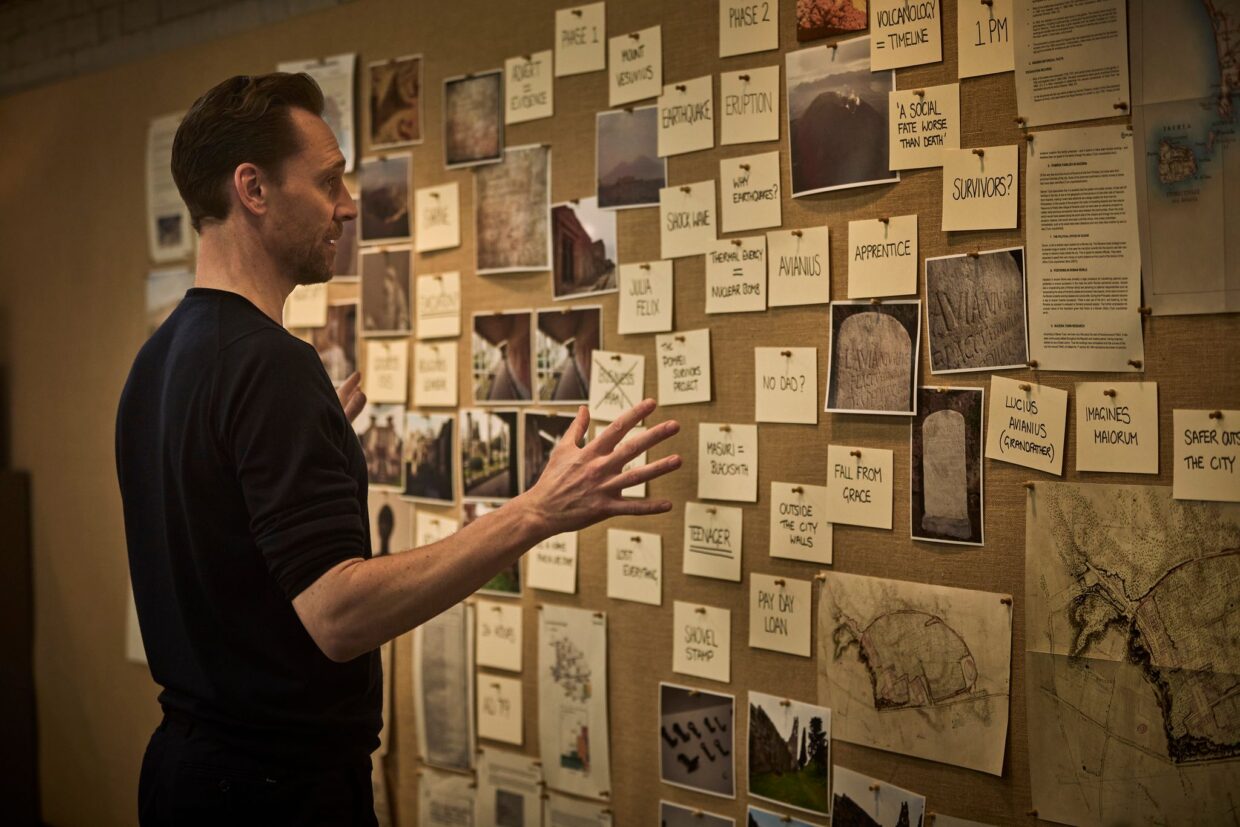
Pompeii is one of history’s most well-documented disasters. Most people know the story: Mount Vesuvius erupted in A.D. 79, preserving an entire city beneath layers of volcanic ash. It’s a tragedy that has been revisited so many times, and it’s hard to imagine there’s anything new left to say. However, Pompeii: Out of Time with Tom Hiddleston manages to do exactly that, shifting the focus away from the eruption itself and toward the people who lived through it.
Throughout the series, National Geographic steps outside its typical cinematic format by blending documentary filmmaking with scripted recreations rooted in archaeological evidence, bringing Pompeii’s residents to life. By following their possible journeys, the series humanizes them, transforming them from archaeological discoveries into fully realized people with ambitions, fears, and families they are desperate to protect.
Of course, reconstructing lives from nearly 2,000 years ago requires some creative license. However, the experts involved in the series – from a Classics professor to an archaeologist to a psychologist – ground their interpretations in what is understood about Pompeii today while drawing comparisons to humanity in the present. The more we learn about Pompeii, the more we realize that, despite centuries of change, people remain fundamentally the same.
Hiddleston is also the perfect host for the series, and his passion for the story is evident. His fascination with Pompeii began when he first visited the city as a teenager, sparking a lifelong interest in its history. He later majored in Classics in college, deepening his understanding of the ancient world, before Pompeii unexpectedly came back into his life during the first season of Loki, where Loki and Mobius (Owen Wilson) travel to the city moments before the eruption.
And Hiddleston’s connection is evident throughout the series. It never feels performative. He approaches each discovery with genuine curiosity, enthusiasm, and respect. It never feels like he’s simply narrating events; instead, he comes across as someone genuinely excited to share a lifelong passion with viewers. It’s obvious he wants to tell the story of who these people were before history reduced them to a single tragic day.
Still, the series is not without a little cheesiness. Some reenactments lean a bit too heavily into the emotion, and a few moments feel more theatrical than necessary. But the drama never undermines the experience. Sometimes, thinking outside the box with an unconventional presentation is exactly what audiences need to feel engaged and invested in what they’re learning. And the series is at its best when it understands that audiences connect most deeply with the people behind historical events.
Indeed, what makes Pompeii: Out of Time with Tom Hiddleston memorable is the reminder that the people of Pompeii were, in many ways, just like us. Faced with unimaginable circumstances, they searched for loved ones, protected their families, helped strangers, and made decisions they hoped would keep the people they cared about alive.
For viewers looking for a straightforward history lesson, the series’ format may feel more stylized – and yes, a little more goofy – than anticipated. However, for those willing to embrace its blend of education and storytelling, it offers a fresh perspective on one of history’s most famous tragedies. It’s informative, entertaining, and – most importantly – very, very human.